
Thursday, May 23rd, 2013
Like most people, I hate secrets that don’t include me.
So that’s why I’m really, really sorry I can’t tell you much about Pop Up Magazine. But I swear it’s not my fault — the event is designed to be ephemeral, and I just can’t remember everything!

Pop Up Magazine is an editorial publication in performance form. Rather than relying on print or other means of recorded information, the series seeks to connect with audiences through live communication. “Articles” consist of speakers, films and other creative performances. The first issue premiered in 2009, after founder Douglas McGray thought up the concept as a means to bring people together over shared stories. Since then, no matter how large the venue, tickets to each new issue have consistently sold out in a matter of minutes.
Perhaps this is a testament to our desire to be a part of something completely unique and unreplicable, even if our participation consists of just sitting back and listening. Each issue is performed only once, never to be repeated, and recording of the event is strongly discouraged. It’s one of those things where you just had to be there: there’s no way to relive the experience.
I was lucky enough to attend the Song Reader Issue earlier this week. The night’s focus was on music, centering around Beck’s Song Reader, an interesting project in itself that also explores the theme of live performance. A variety of bands and orchestras shared their renditions of Beck’s sheet music, and in between songs a selection of authors spoke about their most powerful memories involving music. One of my favorite pieces was by music critic, Jessica Hopper, who began by telling us about her passion for pop music, highlighting her love for Swedish pop maven, Robyn. The story ended at a Robyn concert, at which Hopper went into labor while dancing to “Dancing On My Own.”
Pop Up Magazine was quite an experience. It was interesting to go into an event knowing that my only reference of the evening (besides a schedule on the website) after this would be my recollection of it. I could barely take in Jessica Hopper’s story as I struggled to mentally record everything else I had enjoyed and wanted to look up later. As someone with an unpredictably selective memory, I felt more of an urge to pay attention to every single performer, knowing that I wouldn’t be able to reference a transcript or recording of any sort.
One of the tidy little conclusions it is tempting to draw from Pop Up Magazine is about the value of living in the moment, about leaving technology behind in order to connect directly with the people and events around you. However, what I felt more than this was the vastness of how many interesting ideas there are in the world and, in contrast to that, my own limited capacity to remember them. I walked out of the event with a greater appreciation for our ability to record almost anything, and reference it at any time. It was almost a relief to return to the outside world, knowing that I wouldn’t have to remember everything.
That may sound a little over-the-top, but maybe you just had to be there to understand.
-Ali
Friday, May 10th, 2013
You’re a film festival.
For years, you’ve operated the same way. You line up a roster of films to present, you advertise, you sell tickets, you show the films, and you hand out awards. Simple. At least, it was. Now that online streaming has gone mainstream, there is a whole new group of potential audiences to consider. How do you respond to this shift in expectations about access? Quite simply, it’s time to adapt.
In recent years, a few online-only festivals have sprung up in response to this shift in viewing options, such as the PBS Online Film Festival and the now-defunct Babelgum Festival. Other festivals haven’t changed their format at all. While I’m sure that each of these festivals has had their individual reasons for choosing to go digital or not (factors such distribution rights and budgets may come into play), neither approach attracts a viewer like me. I love watching films but don’t have the money or time to commit to attending a festival in person. On the other hand, if I’m watching something for a festival, I expect the overall filmmaking quality to be higher than something I’d find on YouTube. I’m part of a group of potential film festival audiences that stands somewhere between the typical attendee and a person with no viewing standards whatsoever. How do you keep new audiences like me engaged?

In my experience, no festival has done this better than the Tribeca Film Festival (TFF). TFF makes good on their mission “to reach the broadest possible audience” by staging a unique online component of their larger festival, featuring free streaming film selections and the #6SECFILMS Vine competition, as well as a few low-cost VOD selections. While some members of our team at AC were lucky enough to attend TFF in person (read about that awesome experience here!), I test-drove the festival’s online streaming selections, and was impressed by the setup.
The “watch anytime, anywhere, as much as you want” aspect of some online film festivals makes me question the quality of the films. A festival may offer an amazing lineup of new and innovative films, but the lack of exclusivity lessens its perceived value. As such, TFF has upped the ante by limiting the total number of times each film can be viewed through their online portal. Anyone with internet access can sign up for a free Tribeca Online account, but the view cap makes each film seem more valuable. Viewers understand that they’re part of limited group of people who get to watch that film. I learned this the hard way when I missed out on the internet-famous cat doc, “Lil Bub & Friendz,” because I was too late when I finally signed in to watch it.
What I found most engaging about TFF’s online festival was due in large part to its focus on community participation. One of the key things I miss when I watch a film by myself at home, rather than in a theater, is a sense of camaraderie with fellow theatergoers. Even if I don’t speak to the strangers around me, I share laughter at a joke on screen with them, or we collectively pretend not to cry when something sad happens in the film. Similarly, the online component of TFF encourages viewers to participate and interact with each other by voting for their favorite online selections after they view them. I watched “Alias Ruby Blade: A Story of Love and Retribution,” one of the selections offered online, and it was so good that I not only voted for it, I also tweeted about it, in the hopes that other people would watch it and vote for it, too. So, while I was able to watch a film on my own time, once I finished there were a lot of ways for me to feel a part of a community. TFF even had a Vine competition where viewers could submit their own 6-second films, which could be retweeted and commented on in real-time, sparking real conversations. By encouraging viewers to submit content and vote for their favorite films, TFF made me feel more invested and involved with the festival. I was part of a community and not just an invisible viewer.
By engaging online viewers in ways that emphasizes the value of the films and encourages audiences to participate, TFF has made its online competition into something that people actually feel invested in. These viewers, in turn, become evangelists for the films they feel passionate about and for the festival itself. This is an entire group of viewers that would otherwise be excluded, if audiences were limited to theatergoers only. It’s important, for both festivals and filmmakers, to look beyond the typical in-person screening model for ways to connect with a wider range of audiences. If a film’s primary purpose is to be seen, why not try to get that film seen by as many people as possible?
-Ali
Thursday, May 2nd, 2013
“I really don’t like to have my hand held when I’m watching a film…I wanted to trust my audience.” – Daniel Patrick Carbone
There were many signs of change at the Tribeca Film Festival (TFF) this year. But what I found most encouraging, were the number of films that broke from conventional dialogue and narrative structure, in favor of a more human approach. Rather than telling you what to feel, these films presented real, emotional experiences and let the audience respond instinctively. Of all the films we saw, Hide Your Smiling Faces, a narrative feature about two young brothers grappling with the reality and concept of death, was perhaps the most notable example of this shift. There are few words exchanged throughout the film. Instead, the story unfolds through body language, facial expressions and music.
Ryan Jones and Nathan Varnson, are outstanding as the two brothers. The natural ease with which they interact with each other and the camera makes you forget that this is a movie. It almost feels like you are observing the boys from a few feet away, from beneath an invisible cloak. In the post-screening Q&A, writer/director/editor, Daniel Patrick Carbone spoke about his choice to work with two fairly inexperienced lead actors. He wanted to make something that felt human, and “sometimes it’s hard for someone schooled in theater to act in a way that is realistic.” To allow for this kind of realism, he gave his actors a lot of freedom. “The dialogue was entirely up to them,” he said. “As long as they stayed within the boundaries of the scene.” Many of the more poignant moments were actually shot between takes, when the boys were just doing their own thing. “You can’t tell them to do this or do that, or it won’t come across as honest,” Carbone said.
While it does not have a conventional story arch or climactic finale, Hide Your Smiling Faces commands your attention, by giving you something real to respond to and interpret. “I really don’t like to have my hand held when I’m watching a film,” Carbone said. “I wanted to trust my audience.” Presented in “a loose, vignette-based form,” the film is a series of quiet moments from daily life woven together by the lush, natural beauty of rural New Jersey and a beautiful score by Robert Donne. Carbone had initially aspired to create a film without any music, but quickly recognized its importance. “The music is like another character in the movie,” he said. “It glues pieces together that aren’t held together by traditional narrative.”
It is only fitting that such a participatory film was partially funded by a Kickstarter campaign. The popular crowd-funding platform is changing the way that art gets made, bringing filmmakers and audiences together to create truly independent films. More than 3,000 short films and nearly 5,000 feature-length films have been successfully funded on Kickstarter since 2009. About half of the films we saw at TFF this year received some backing through the platform. “It’s a powerful way to connect with people who really believe in a project,” said Carbone in a TFF interview with Karen Kemmerle.
Kubrick and Cassavetes were masters at creating engaging, human experiences. But it’s rare to see contemporary movies that prioritize emotional authenticity and relinquish so much control to their audience. But I’m happy to see works like Hide Your Smiling Faces as a sign of a new era of filmmaking.
- Becky
Tuesday, April 30th, 2013
This is our first post for our 6 Questions interview series, where we email creators, curators, and other people we admire with 6 questions about their work and process. We then share their responses with you. - Ali
National Geographic’s “Found” is a tumblr showcase of vintage photographs from the National Geographic archives. Curated by Web Barr, Janna Dotschkal, and William Bonner, the blog highlights rarely-seen images that offer glimpses into a past that is startlingly exotic, even when its subjects are mundane.
We asked the team a few questions about the project, and here’s what they had to say:
1. National Geographic has a wide range of archival media at its disposal, from vintage maps to written material. Why do you choose to curate photographs, in particular, over any other kind of media?
National Geographic is known for its visual storytelling. Over the last 125 years, we’ve accumulated a vast collection of images that have never been seen by the public, let alone digitized. We felt this was the perfect opportunity to showcase the photo collection with large photos, minimal text and “letting the photography speak.” That said, we’re keeping the possibility of curating maps and other types of media in the future open.
2. Why do you think it’s important that these photographs are brought to the public eye?
Most of these photographs have never been seen or are buried in the pages of old magazine stacks. Photography is ubiquitous today, but we really don’t have a clear window to the world as it was in the past. Sure, there’s photos of famous events or people, but there aren’t many photographs being surfaced from the past that show regular people living their day-to-day lives.
3. What’s the process for finding a photograph to post?
We look for images that are unusual and create a sense of wonder. Some of the photos show exotic places or unbelievable moments, while others reveal everyday things depicted in an interesting light. We usually sift through the archives searching by photographer name or very broad keywords. Occasionally a specific thing or event will pop up in our heads and then we do a more narrow search. We want “Found” to be a mix of aesthetic styles and eras, so sometimes we use unconventional search methods to find a wide variety of striking images.
4. Tell us about a favorite photograph you’ve curated.
Web Barr — I love most of them but one of the images that has really inspired me is a photo of a girl feeding a parking meter for her pony in El Paso, TX. It shows a different time and place in America and how things “used to be.” It’s a fun photo that I came across in our internal database that inspired me to share our archived photos with a broader audience.
Janna Dotschkal – My favorite photo is the first image from the Gellert bath. It’s a color autochrome image from 1930 and the color palette is full of beautiful muted tones. I love seeing the movement of people in the bath and the amazing swimwear. I’m not 100% sure but I think the bath is an old fashioned wave pool!
5. Does the question of ethics ever come up when choosing a photograph? For example, some of the original information (date, location, context) is missing for the photos — how do you decide what’s okay to publish?
Yes and no. Clearly, we prefer to have more information than less, but some of the decisions are made on a photo-by-photo basis. We’ve noted in our “About” page that we really don’t have all the information that we’d like and for readers to send in any additional stories or information they might have on any particular photo. This has actually been quite thrilling as we’ve received background stories, dates, locations and more from our audience. We’re looking to highlight these stories soon as a way to encourage even more engagement from our audience.
6. Above all, what do you want people to take away from this blog?
We want “Found” to be a doorway into another time and place. The stories captured in each photograph should transport people to other worlds and invoke a real. We want “Found” to be a positive experience, but also one that is open-ended so that our audience can have their own impressions and interpretations.
Friday, April 19th, 2013
Imagine a film festival where all the submissions are less than a minute long. Specifically, each submission is 6 seconds long.
That’s basically what the Tribeca Film Festival has created this year with its #6SECFILMS category, a competition in which filmmakers submit their Vine films in hopes of taking home $600. That’s a return of $100/second, if you stop to think about it.
So, how do you make those 6 seconds worthy of winning? Looking through TFF’s short list of 40 Vines, you see a wide range of tactics. Some filmmakers exploit visual puns, hoping to elicit a chuckle from the judges. Others go the more existential route and focus on non-linear narratives, as with Tom DesLongchamp’s “Yellow Ochre.” Quite a few filmmakers turn the camera on themselves and star in their own mini-dramas, such as Troy Hitch’s three-part saga chronicling his decision to shave. Perhaps unsurprisingly, babies show up as another popular storytelling mechanism, starring in a total of three submissions.
Personally, as much as I like babies, puns, and selfies, those ingredients alone don’t make the kinds of films that stick with me. After going through all of the short list selections, I came across three entries that I think exemplify great filmmaking. Each one kept me interested far beyond their 6-second time spans.
Beth Murphy’s “Life Imitating Art”
This film is definitely a stand out. Submitted by documentarian Beth Murphy, this film intrigued me and left me with a lot of things to think about. Who is this woman? Why is she standing so still? Was the painting supposed to be of her, or was this purely coincidence?
Through A Glass’ Minivan Family Sticker Film
This is the only single-shot film in the entire list. It walks the line between funny and sad, and is just perfectly orchestrated. I love how it leaves you hanging in that one second after the film ends before you can put it all together.
Jordan Burt’s “All I Have Is Doritos”
Okay, maybe this one only struck a chord with me because I love Doritos.
-Ali
Thursday, April 18th, 2013
When does increased visibility contribute to your chances of staying alive?
As a part of its San Francisco lineup, the Human Rights Watch Film Festival recently screened Reportero. This documentary chronicles the lives of a group of political journalists in Baja, California, who face death threats and other risks that are just as serious and bloody as the matters they report on.
By showcasing the reporters as individual people rather than numbers in a body count, the narrative stands out against the typical sensationalist drug war stories we often hear in the news. Reportero puts the events in perspective by bringing things down to the human level. There is less emphasis on blood and guts than on the work and ideals of the individual reporters. The film’s shots linger on the faces of the reporters themselves, and throughout the film we watch as they interact with others in everyday, mundane moments. Watching photojournalist Sergio Haro sit down to dinner with his wife, for example, gives us more insight into his character and makes it easier to relate to him. By portraying the reporters as ordinary people working to bring justice to light, the film de-sensationalizes the drug wars and offers a more realistic representation of the situation.
One unexpected benefit of representing these journalists as individuals in Reportero is that the reporters feel that they actually gain more protection. Through exposing their identities on a global scale, any murders or other wrongs against the journalists are made more visible as well. What if protecting human rights was always as easy as showing your face?
-Ali
Wednesday, April 10th, 2013
“Takeaway” – “Single Take” – “Live” … call it what you will. I really enjoy artists preforming live music. Each error, each improvised riff, makes that preformance unique.
The best part about a live show, is hearing each track played uniquely to that performance. – Here are two live performances by Noah Gundersen & Brian Warren.
One, camera, one mic, one take.
-Nick
Noah Gundersen – “Family”
Brian Warren – “I Was Young When I Left Home” (Bob Dylan Cover)
Thursday, April 4th, 2013
There is no easy way to categorize the Richard Linklater’s film, Bernie, based off a 1998 newspaper article by Skip Hollandsworth that reported on the events surrounding a murder in Carthage, Texas. At first glance it seems like another Jack Black comedy, but the film’s adoption of documentary elements blurs the line between what’s real and what’s embellished, leaving the viewer with a broad and complex understanding of what happened.
Bernie’s story is largely told through a chorus of town gossips. By telling the story through the townspeople themselves, Linklater brings the audience into the social ecosystem of a small town, where most of the local communication is spread through word of mouth. In an interview with the Daily Texan, Linklater notes:
A lot of those jokes were in the actual transcripts of interviews Skip had done… I thought, “I’ve never seen a movie that told its story through town gossips,” because that’s really strong in a small town. It’s a huge social element and I thought it was appropriate for the storytelling.
Occasionally, though they witnessed the same events, the individual townspeople draw completely different conclusions about what happened. Each speaker has their own spin on the story and on Bernie’s character. Rather than just presenting the historical and impersonal facts of the matter, the film provides a sense of perspective due to its non-typical narrators. Through their words, not only do you get a sense of what happened, you also get a sense of who they are and where they’re coming from, and how that colors their interpretations of what happened.
By featuring real Carthage townspeople, Linklater also brings a more personal connection to what happened. Instead of acting out a “character,” each of the townspeople can draw from their own real experiences and relationships. In an interview with NPR, co-screenwriter Hollandsworth explains:
And there were times when the East Texans who loved Bernie and despised Mrs. Nugent so much would watch Shirley McLaine playing Mrs. Nugent and you could feel the hostility emerge in them. And then when Jack Black…arrived on the set, you could hear some of the older ladies from East Texas actually coo as if Bernie had come back to life for them.
What makes Bernie an unexpected and complex narrative is that everyone involved adds their own voice and interpretation of what happened. Jack Black and Matthew McConaughey, not surprisingly, bring a sense of humor to the film, while Shirley McLaine brings a sense of tenderness that almost make you feel bad for her character…for a few scenes, at least. At the broader level, Linklater’s treatment of the script keeps Bernie firmly between comedy and tragedy, so that you’re left with an ambivalent view of what happened. You can’t quite judge Bernie as being simply a good or bad person, because you’ve seen too many sides of him.
Just like a documentary film gives a comprehensive view of a subject by collecting and presenting proof points from a variety of sources, Bernie gives a comprehensive view of the murder by collecting the interpretations from outsiders of varying degrees. For a story that can’t be told by those who were directly involved (Mrs. Nugent is dead, and Bernie is in prison), the film certainly presents a unique solution.
Have you seen any other films that blend documentary and fiction as seamlessly as Bernie? If so, let us know so we can put them on our list! Tweet us here with your responses and film suggestions.
If you liked Bernie, get excited about Linklater’s next docu-fiction hybrid project, Boyhood, currently still in production, or his original travel-fiction series for Hulu, “Up to Speed.”
-Ali
Wednesday, March 20th, 2013
Lately, I’ve been hearing a lot about the upcoming documentary, Leviathan. The film explores life on a commercial fishing boat through the lenses of small digital cameras, tossed in the water along with the nets, affixed to the helmets of the crew and dragged across the deck. There is little dialogue and no voice-over narration. In full disclosure, I haven’t seen the film yet. I’m still waiting for it to show locally. But while reviews suggest that this view of fishing life is disorienting, critics are also buzzing over the unconventional narrative and visceral perspective.
What really intrigues me in all of the hype is the unique point of view of the film’s directors. You’ve got Lucien Castaing-Taylor’s avant-garde approach to communication, mixed with and Véréna Paravel’s experience documenting the lives of people on the edges of society. The result is a film that explores a perspective rarely represented in the media, through the sounds and sights that make up their daily jobs. In an interview with Gawker, Castaing-Taylor explains:
“I hate most documentaries. The moment I feel like I’m being told what to think about something, I feel that I want to resist the authority of the documentarian. We’re more interested in making films that are more open-ended, that ask the spectators to make their own conclusions.”
Castaing-Taylor heads up Harvard’s Sensory Ethnography Lab (SEL), which provides “an academic and institutional context for the development of creative work and research that is itself constitutively visual or acoustic — conducted through audiovisual media rather than purely verbal sign systems — and which may thus complement the human sciences’ and humanities’ traditionally exclusive reliance on the written word.” In simpler terms, the lab promotes creative works that favor sensory communication over spoken word. Prior to Leviathan, Paravel, who also works with the SEL, directed 2010’s Foreign Parts, a critically acclaimed documentary about a subculture of people living amid the auto shops and junk yards of Queens. The film was hailed for “its courage of questioning the traditional approach of anthropological research.” In his review for the New York Times, A.O. Scott wrote, “The filmmakers are not concerned with rigorous obedience to the conventions of cinéma vérité. But they are more interested in observation than in interpretation, and in preserving above all a visual and aural record of the texture of life in a place that might well be destined for oblivion.”
At AC, we believe that a documentary should be driven by the reality of a subject, rather than a documentarian’s personal style or agenda. And we admire Castaing-Taylor’s philosophy that audio and visual details can communicate just as much as words do, and that each piece of a film makes an important contribution to its overall message. I love that Castaing-Taylor and Paravel are pushing the limits of the genre, paving the way for new filmmakers to further explore how to communicate various truths through film.
I like the idea that Leviathan communicates what it’s like to live and work on a commercial fishing boat through a visceral experience, unique for each viewer. I’m looking forward to experiencing this film for myself, since that seems to be the only way to fully understand it.
Have you seen the film yet? If so, what are your thoughts?
- Ali
Wednesday, December 19th, 2012
We’re back! After a two-week whirlwind tour of some of the finest restaurants of New York City and Chicago, the AC team has landed. (And that was just part two of this project.)
Shooting for the Priceless Cities campaign, we’ve unpacked our gear bags at over twenty-four locations between the two cities over the past few weeks, taking the time to talk to quite a few top-notch chefs, sommeliers, and culinary scientists. Although you’ll see our spots as they pop up here and there online, the videos won’t tell you anything about what the shooting process is really like.
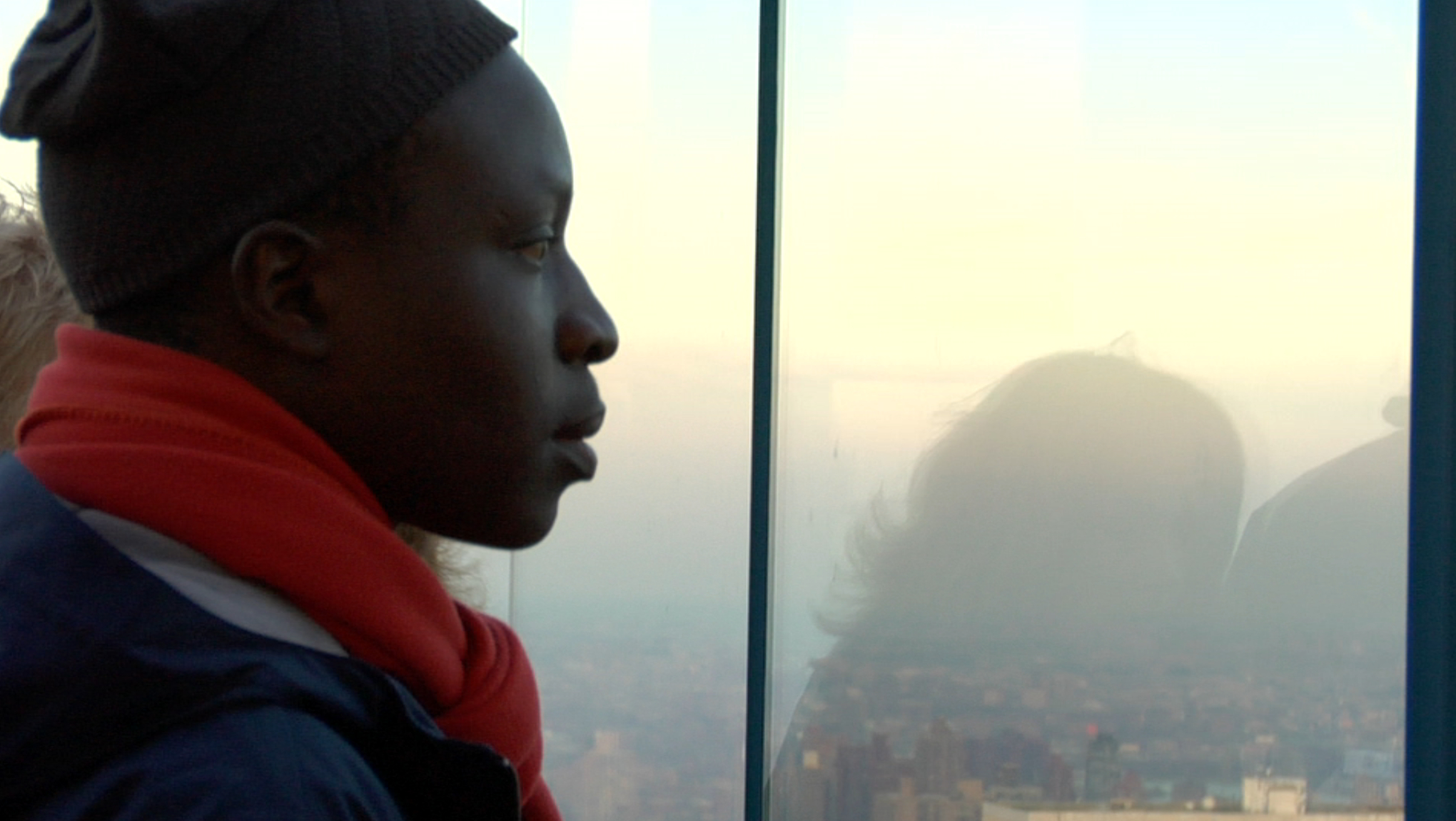
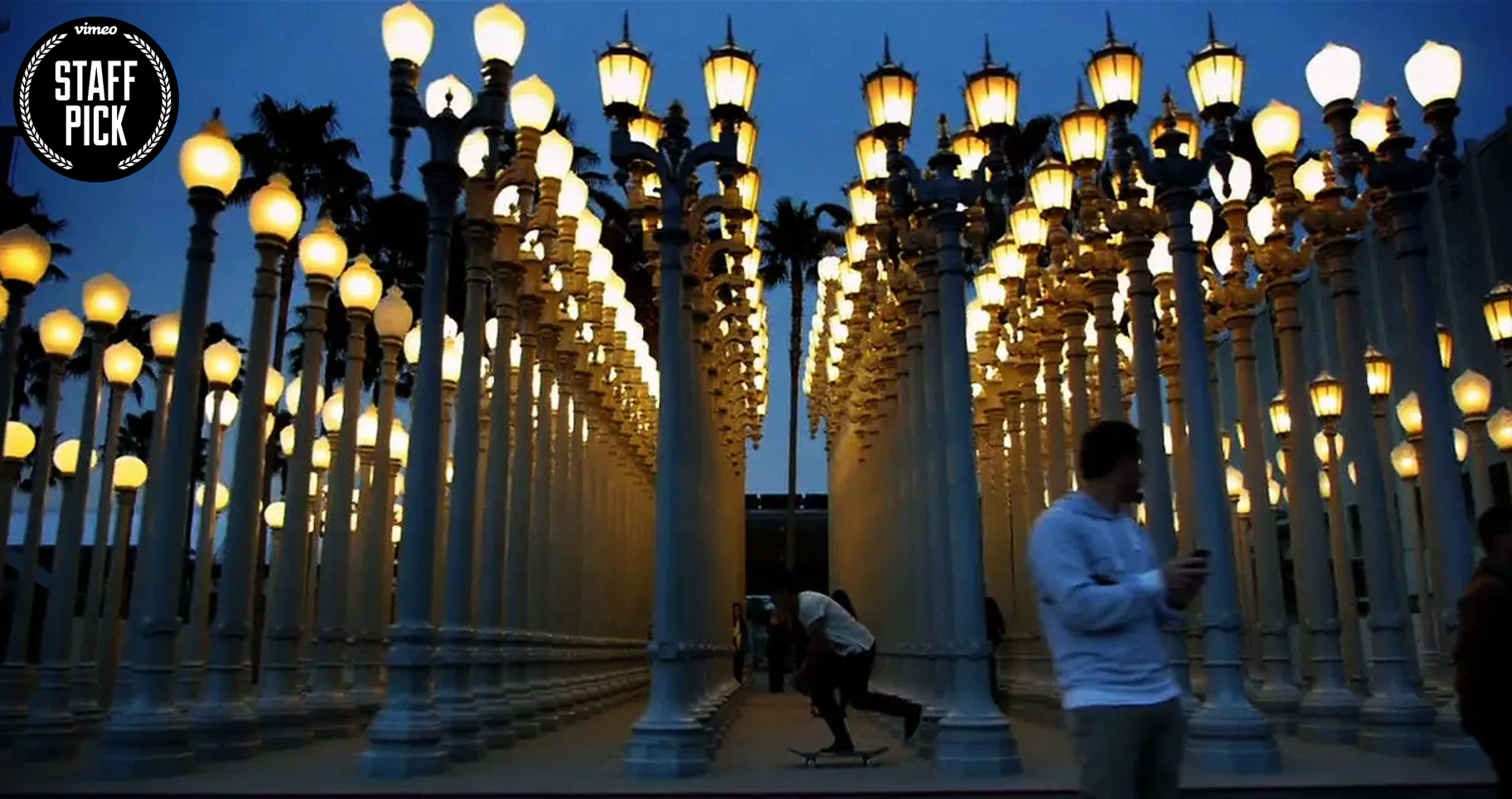
To give you a peek into these past few weeks, here are a few of our own priceless moments captured through AC’s behind-the-scenes lenses:
JASON
NICK
BECKY
ALI
NATHAN